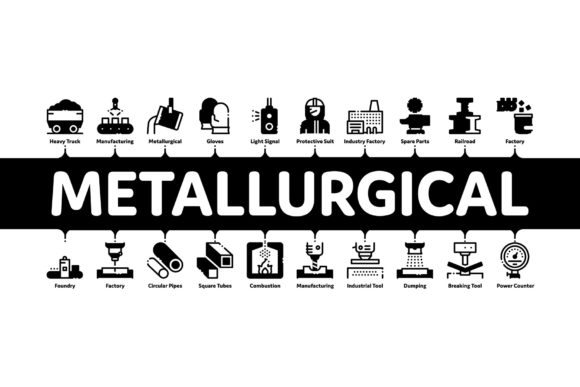
Maximizing Design Efficiency with Resizable Infographic Icon Layers
In the fast-paced world of visual communication, clarity is currency. Whether you are presenting quarterly financial data to stakeholders or creating an educational handout for a classroom, the ability to convey complex information quickly is paramount. This is where the strategic use of an Infographic Icon - Layer becomes an indispensable asset in modern design workflows. Unlike flat, rasterized images that lose quality when adjusted, layered vector assets provide designers and non-designers alike with the flexibility to customize, resize, and repurpose visual elements without compromising professional standards.
The shift toward vector-based infographic elements is not merely a technical preference; it is a practical necessity for scalable content creation. When working with printable projects, the margin for error shrinks significantly. A pixelated icon on a digital slide might be forgivable, but on a high-resolution brochure or large-format poster, it undermines credibility. Understanding the specific characteristics of layered EPS10 files and high-DPI previews allows creators to leverage these tools effectively across diverse media formats.
The Technical Advantage of EPS10 and Vector Scalability
At the heart of any professional infographic toolkit lies the file format. The inclusion of 100 fully resizable vector files in EPS10 format represents a significant advantage over standard PNG or JPG libraries. EPS10 (Encapsulated PostScript version 10) is a legacy-compatible yet robust vector format that maintains mathematical precision regardless of scale. This means an icon designed at two inches can be blown up to cover a billboard or shrunk down for a business card without losing a single crisp edge.
For designers using Adobe Illustrator, CorelDRAW, or Affinity Designer, the Infographic Icon - Layer structure within these EPS files offers granular control. Rather than receiving a flattened image where colors and shapes are permanently merged, layered vectors allow you to isolate specific components. Need to change the accent color to match a client’s brand guidelines? With a layered file, this is a matter of seconds rather than hours of reconstruction. This editability transforms a static template into a dynamic design system that adapts to unique project requirements.
- Infinite Resolution: Vectors rely on mathematical paths rather than pixels, ensuring sharpness at any zoom level.
- Color Customization: Global swatches and separated layers make rebranding effortless.
- Element Isolation: Turn off unnecessary layers or rearrange components to create custom compositions.
- File Size Efficiency: Vector files are often smaller than high-res raster equivalents, keeping project files manageable.
Bridging Digital Previews and Print Production
One of the most common friction points in asset management is the disconnect between what you see in a folder and what you get in the final output. High-quality JPEG previews at 300DPI serve as the critical bridge in this workflow. While the EPS10 files are the production-ready masters, the 300DPI JPEGs function as visual references and rapid prototyping tools.
When sifting through a library of 100 icons, opening each vector file individually is time-prohibitive. The JPEG preview allows for instant visual scanning, enabling teams to storyboard presentations or mock up layouts in software like PowerPoint, Keynote, or InDesign before committing to the heavy lifting of vector editing. Furthermore, because these previews are rendered at 300DPI (dots per inch), they meet the industry standard for commercial printing. This dual-purpose functionality ensures that whether you are drafting a concept or sending a file directly to a local print shop, the quality remains consistent.
It is important to note that while the JPEG preview is print-ready, it lacks the editability of the Infographic Icon - Layer. Designers should treat the JPEG as a placeholder or a final-output option for simple documents, while reserving the EPS source files for projects requiring customization or large-scale reproduction. Understanding this distinction prevents costly reprint errors and streamlines the asset selection process.
Practical Applications Across Industries
The versatility of a comprehensive vector icon set extends far beyond traditional graphic design. In corporate environments, these assets are frequently used to transform dense annual reports into digestible visual narratives. A well-structured layer system allows marketing teams to maintain brand consistency across hundreds of slides, ensuring that every chart, process diagram, and statistic utilizes the same visual language.
Educators and academic researchers also benefit immensely from resizable vector assets. Textbooks, research posters, and e-learning modules require visuals that remain legible at various sizes. A diagram explaining cellular biology or historical timelines must be clear whether viewed on a tablet screen or printed on an A0 poster for a conference hall. The ability to adjust stroke weights and text sizes within the Infographic Icon - Layer ensures accessibility and readability across all learning mediums.
Additionally, the packaging and product design industries rely heavily on scalable vectors for labeling and instructional inserts. Space on physical packaging is limited, and icons must often be reduced to minimal dimensions while retaining recognition. Raster images fail at this scale, becoming muddy blurs. Vector icons retain their integrity, ensuring safety warnings, recycling symbols, and feature highlights communicate effectively even at thumbnail size.
Workflow Integration and Best Practices
Owning a collection of 100 fully resizable vector files is only the first step; integrating them efficiently into your workflow maximizes their value. Organization is key. Because these assets are layered, establishing a naming convention and folder structure early on saves countless hours later. Grouping icons by category—such as finance, technology, healthcare, or logistics—allows for faster retrieval during tight deadlines.
When working with the Infographic Icon - Layer, always check the layer panel upon opening the EPS10 file. Some legacy exports may group elements unexpectedly. Taking a moment to ungroup and relabel layers according to your internal standards prevents confusion when handing off files to other team members or returning to a project months later. Additionally, verify that text elements are either outlined or accompanied by the necessary fonts. While outlining text preserves appearance, keeping live text allows for easier translation and updates, provided the font licenses permit it.
- Audit the Asset: Open the EPS10 file and inspect layer hierarchy and color modes (CMYK vs. RGB).
- Create a Master Library: Import frequently used icons into your design software’s native library panel for drag-and-drop access.
- Establish Color Styles: Map icon colors to global swatches to enable one-click theme switching.
- Test Output Early: Print a test page at actual size to verify stroke weights and legibility before final production.
Considerations Before Implementation
While vector assets offer superior flexibility, they require compatible software and basic technical knowledge. Users without access to vector editing tools like Illustrator or Inkscape will be limited to using the 300DPI JPEG previews. This is perfectly adequate for many office and educational tasks, but those seeking full customization must ensure they have the appropriate applications installed.
Another consideration is stylistic coherence. Even with 100 icons available, mixing disparate styles within a single project can create visual dissonance. Select a cohesive subset from the library that shares similar line weights, corner radii, and fill treatments. The beauty of a curated Infographic Icon - Layer collection is that it has been designed as a unified system. Leveraging this inherent consistency elevates the perceived professionalism of any deliverable, making complex data feel organized, intentional, and accessible to the intended audience.