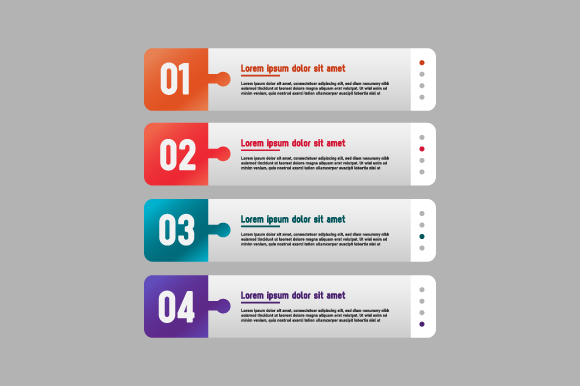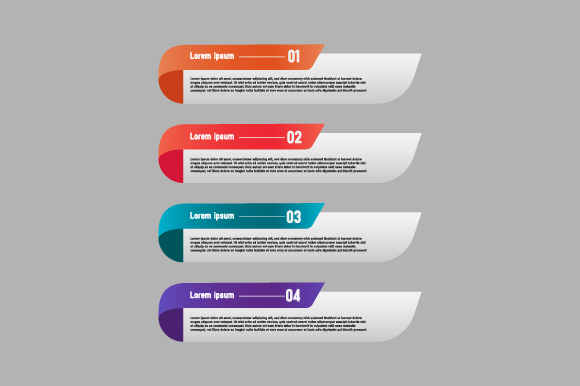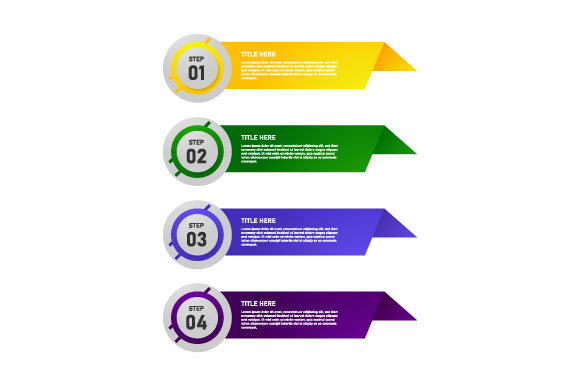
Abstract Set Infographic Banner: Elevating Visual Communication in Modern Design
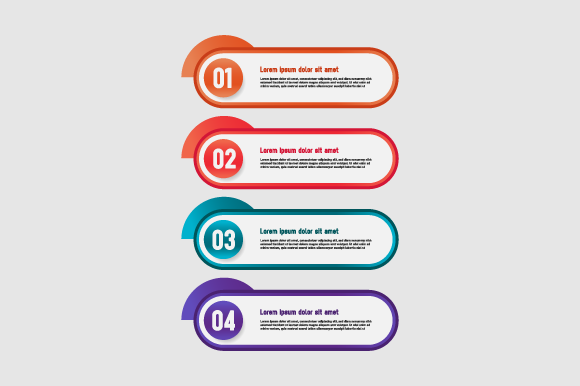
In an era defined by information overload, the ability to distill complex data into digestible visual narratives has become a critical skill for professionals across industries. The Abstract Set Infographic Banner represents more than just a decorative element; it is a functional design asset that bridges the gap between raw statistics and human comprehension. As digital content consumption accelerates, creators and businesses are increasingly turning to abstract visual metaphors to maintain engagement without sacrificing clarity. These banners serve as versatile containers for information, allowing designers to present workflows, timelines, and hierarchical data in a manner that feels contemporary and uncluttered.
The relevance of these assets extends beyond simple aesthetics. In modern web design and corporate reporting, the Abstract Set Infographic Banner collection for decoration and element design provides a structural foundation that guides the viewer’s eye. Unlike literal imagery, which can sometimes limit interpretation or date a design quickly, abstract forms offer timeless flexibility. They allow brands to maintain visual consistency across diverse platforms while adapting the specific content to different audiences. Whether used in a pitch deck, a blog post header, or an annual report, these elements function as cognitive anchors, helping users process information faster and retain key messages longer.
The Shift Toward Functional Abstraction in Digital Media
Design trends have undergone a significant transformation over the last decade, moving away from hyper-realistic skeuomorphism toward cleaner, more conceptual visual languages. This shift is driven largely by changing user habits and the technical demands of responsive environments. Today’s audiences scan content rapidly, often on mobile devices where screen real estate is limited. An effective Abstract Set Infographic Banner caters to this behavior by prioritizing hierarchy and flow over ornamental detail. The abstraction serves a purpose: it removes visual noise, allowing the essential data points to stand out against a harmonious background.
This evolution also reflects a broader change in how businesses communicate value. Stakeholders and consumers alike expect professionalism paired with accessibility. Dense text blocks are frequently ignored, while generic stock photography often fails to convey unique brand identities. Abstract infographic elements solve this dilemma by providing a neutral yet distinctive canvas. They enable organizations to visualize intangible concepts—such as innovation, connectivity, or strategic growth—without relying on clichéd imagery. By integrating these banners into their visual ecosystems, companies signal a forward-thinking approach that values user experience as much as the data itself.
Adapting to Multi-Platform Workflows
Modern creative workflows demand assets that are inherently flexible. A design created for a landscape-oriented presentation slide must often be repurposed for a square social media post or a vertical mobile story. The utility of an Abstract Set Infographic Banner lies in its modularity. Because these designs rely on geometric shapes, gradients, and fluid lines rather than fixed scenes, they can be cropped, stretched, and rearranged without losing integrity. This adaptability is essential for marketers and educators who must produce high volumes of content across varying aspect ratios while maintaining a cohesive brand identity.
Furthermore, the rise of collaborative design tools and remote work has standardized the need for universally compatible file formats. Teams distributed across different time zones and software preferences require assets that open reliably and edit cleanly. Providing a comprehensive suite of formats ensures that no team member is bottlenecked by technical incompatibility, streamlining the production pipeline from concept to publication.
Technical Versatility Through Comprehensive File Formats
The true value of any digital design asset is determined not just by its visual appeal, but by its technical interoperability. When acquiring an Abstract set infographic banner collection for decoration and element design, the inclusion of Ai, Eps, Svg, Jpg, and Png files addresses the full spectrum of professional use cases. Understanding the specific application of each format is crucial for maximizing the return on investment and ensuring optimal output quality across print and digital mediums.
- AI (Adobe Illustrator): This is the master source file, essential for deep customization. It retains all layers, anchor points, and editable text, allowing designers to fundamentally alter the composition, adjust color palettes to match brand guidelines, or combine multiple banner elements into new configurations. For agencies and in-house design teams, the AI file is the cornerstone of long-term asset management.
- EPS (Encapsulated PostScript): Serving as the universal vector standard, EPS files ensure compatibility across various vector editing software beyond Adobe’s ecosystem. This format is particularly vital for print production, large-format signage, and merchandise. It guarantees that the crisp edges and smooth curves of the abstract designs remain intact regardless of scaling, making it indispensable for physical applications like trade show displays or packaging.
- SVG (Scalable Vector Graphics): In the context of web performance and responsiveness, SVG is arguably the most critical format. Unlike raster images, SVGs are code-based vectors that scale infinitely without pixelation while maintaining tiny file sizes. Using an Abstract Set Infographic Banner as an SVG on a website ensures sharp rendering on retina displays and high-DPI screens while contributing to faster page load times—a key factor in both SEO and user retention.
- PNG (Portable Network Graphics): For non-designers, marketers, and content managers who need quick implementation, PNG offers lossless compression with support for transparent backgrounds. This makes it ideal for overlaying infographic elements onto colored backgrounds, slides, or documents without the need for advanced editing software. It strikes a balance between quality and ease of use for everyday business communication.
- JPG (Joint Photographic Experts Group): While vector formats are superior for graphics, JPG remains the universal standard for previewing, sharing via email, or uploading to platforms that do not support transparency or vectors. Having high-resolution JPG versions facilitates rapid prototyping and stakeholder approval processes before final production begins.
Practical Applications Across Professional Disciplines
The versatility of abstract infographic banners makes them applicable to a wide array of professional scenarios. For educators and trainers, these visuals transform dry curriculum materials into engaging learning aids. Abstract representations of processes help students grasp systemic relationships without getting bogged down in irrelevant details. The clean aesthetic reduces cognitive load, facilitating better focus and memory retention during lectures or e-learning modules.
Entrepreneurs and startup founders frequently utilize these collections in pitch decks and investor updates. When presenting business models or market analysis, clarity is paramount. An Abstract Set Infographic Banner can visually organize revenue streams, user acquisition funnels, or product roadmaps in a way that looks polished and professional, even if the company lacks a dedicated design team. The availability of editable vector files means these assets can grow alongside the business, adapting to new data without requiring expensive custom illustrations for every update.
For marketers and bloggers, these banners serve as powerful tools for content differentiation. In saturated niches, unique visual branding helps content stand out in search results and social feeds. Abstract infographics can break up long-form articles, improving readability and dwell time. Moreover, because these designs are non-representational, they avoid the cultural or demographic biases sometimes associated with photographic stock imagery, making them safer choices for global campaigns targeting diverse audiences.
Enhancing User Experience Through Visual Hierarchy
Beyond specific industry applications, the integration of abstract infographic elements speaks to fundamental principles of user experience (UX) design. Effective UX relies on guiding users through content intuitively. Abstract banners often incorporate directional cues, spacing, and color contrast that naturally lead the eye from one piece of information to the next. This subtle orchestration improves navigation and comprehension, reducing friction for the end-user.
Additionally, these elements contribute to emotional design. While data is rational, the presentation of data is emotional. Soft gradients and organic curves can make technical information feel more approachable and human-centric, whereas sharp angles and high-contrast geometry might convey precision and authority. By selecting the appropriate style within an Abstract Set Infographic Banner collection, creators can align the emotional tone of their visuals with the message they intend to convey, creating a more resonant and effective communication piece.
Future-Proofing Your Visual Asset Library
Investing in high-quality, multi-format design resources is a strategic decision that pays dividends over time. As display technologies continue to advance and new platforms emerge, the demand for resolution-independent, adaptable graphics will only increase. Raster-only assets risk obsolescence as screen densities improve, whereas vector-based collections like the Abstract Set Infographic Banner remain perpetually relevant.
Moreover, owning editable source files protects against vendor lock-in and licensing uncertainties. When you possess the Ai and Eps files, you have full control over the asset's lifecycle. You can archive components for future reuse, modify them to comply with updated accessibility standards, or integrate them into emerging formats like augmented reality interfaces. This ownership model aligns with sustainable design practices, encouraging the refinement and repurposing of existing resources rather than the constant consumption of new ones.
Ultimately, the Abstract Set Infographic Banner collection is a toolkit for modern storytelling. It empowers professionals to communicate complex ideas with elegance and efficiency, meeting the expectations of today’s visually literate audience. By leveraging the full range of provided file formats—from the editability of AI to the web-readiness of SVG—creators can ensure their messages are delivered with maximum impact, regardless of the medium or context. In a landscape where attention is scarce and clarity is king, these abstract elements provide the structure necessary to turn information into insight.