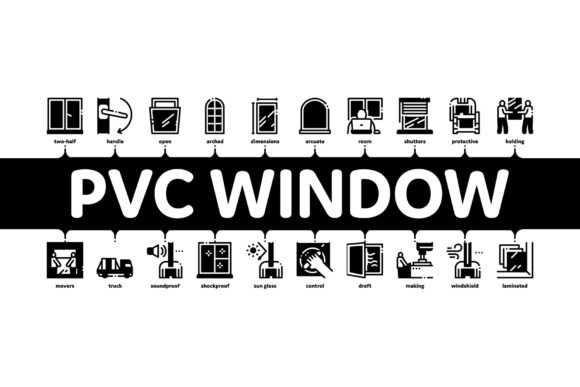
Pvc Window Frames Minimal Infographic: Strategic Visual Communication for Technical Industries
In the competitive landscape of architectural manufacturing and construction marketing, clarity often dictates conversion. The Pvc Window Frames Minimal Infographic serves as more than a decorative element; it functions as a strategic communication tool designed to bridge the gap between complex engineering specifications and consumer understanding. For entrepreneurs, marketers, and product managers in the fenestration industry, leveraging this specific visual asset requires moving beyond aesthetic appreciation toward intentional application. When utilized correctly, these minimal vector assets streamline decision-making processes for clients, reduce pre-sales consultation time, and establish a professional brand authority that generic stock photography cannot achieve.
The strategic value of a Pvc Window Frames Minimal Infographic lies in its ability to isolate variables. Unlike photorealistic renders that include environmental noise, lighting variations, and background distractions, a minimal infographic focuses entirely on the product’s anatomy and function. This reductionist approach is essential when explaining technical differentiators such as thermal breaks, multi-chamber profiles, or glazing bead mechanics. By stripping away non-essential visual data, you guide the viewer’s cognitive load directly to the value proposition. For decision-makers evaluating vendors, this visual precision signals organizational competence and attention to detail, traits that are highly correlated with manufacturing quality in the minds of B2B buyers and homeowners alike.
Aligning Visual Assets with Business Objectives
Before integrating a Pvc Window Frames Minimal Infographic Web Banner Vector into your digital ecosystem, it is necessary to define the specific operational goal the asset must support. Random deployment of technical illustrations rarely yields measurable returns. Instead, map the asset to distinct stages of the customer journey or internal workflow.
- Lead Qualification: Use detailed infographics on landing pages to self-select serious buyers. Clients who engage with technical cross-sections are typically further along in the buying cycle than those engaging with lifestyle imagery.
- Sales Enablement: Equip sales teams with high-resolution JPG exports of window details and handle mechanisms to use during consultations. This standardizes the pitch and ensures accurate technical representation regardless of individual salesperson expertise.
- Installation Support: Repurpose jalousie illustrations and frame diagrams for post-purchase documentation. Clear visual guides reduce installation errors and warranty claims, directly impacting operational margins.
- SEO and Content Depth: Search engines prioritize helpful content. An infographic accompanied by semantic text describing "architectural glass building detail" satisfies user intent better than text alone, potentially improving dwell time and ranking for long-tail technical keywords.
When the objective is brand positioning, the minimal aspect of the infographic becomes a stylistic differentiator. In an industry saturated with cluttered blueprints and low-quality clip art, clean vector lines suggest modernity and precision. This is particularly relevant for companies targeting architects and designers who value aesthetic discipline. The choice of format matters here; while JPGs are sufficient for web banners, retaining the EPS source file ensures that print collateral, trade show signage, and large-format technical manuals maintain crisp edges at any scale.
Technical Versatility and Format Management
Understanding the technical specifications of your assets is a prerequisite for efficient production workflows. The availability of both JPG and EPS formats for Pvc Window Frames Minimal Infographic assets offers distinct advantages that should be leveraged strategically rather than interchangeably.
The EPS (Encapsulated PostScript) format is your master asset. It is vector-based, meaning it uses mathematical equations rather than pixels to define shapes. This allows for infinite scalability without quality loss. Strategically, you should always perform edits, color corrections, and layout adjustments on the EPS file. If your brand guidelines change or if you need to adapt a standard window frame illustration to match a custom product line, the EPS file provides the necessary flexibility. Furthermore, vectors allow for easy isolation of specific elements; you can extract just the handle illustration or the jalousie mechanism from a larger composition without degrading the surrounding negative space.
Conversely, the JPG format serves as the distribution asset. It is optimized for web performance, email newsletters, and quick sharing via messaging platforms. However, reliance solely on rasterized JPGs creates long-term friction. If you only possess a low-resolution JPG of a carrying truck illustration or window detail, you limit future use cases to small-screen digital displays. A prudent asset management strategy involves maintaining a centralized library of master EPS files while generating optimized JPG derivatives only as needed for specific campaigns. This prevents version control issues and ensures that high-value marketing materials remain adaptable to emerging platforms and higher-resolution display standards.
Contextual Application: From Components to Logistics
A comprehensive visual strategy encompasses the entire product lifecycle, not just the finished installation. The inclusion of logistical elements like the carrying truck illustration alongside technical architectural glass building detail demonstrates a holistic understanding of the client's needs. Each component of the infographic suite addresses a different stakeholder concern.
Product Anatomy and Trust
Detailed illustrations of PVC frames, handles, and glazing systems address performance anxiety. Buyers need to visualize how weather sealing works or how a multi-point locking system engages. A minimal infographic that clearly labels these features reduces ambiguity. When presenting these visuals, pair them with concise, benefit-driven copy. Instead of merely labeling "EPDM gasket," explain "continuous weather seal for draft elimination." The visual proves the claim; the text explains the value.
Logistics and Project Planning
The carrying truck illustration is often overlooked in marketing but is critical for operations and project management. For contractors and site managers, understanding delivery logistics is as important as product specs. Using this visual in proposals or onboarding documents sets realistic expectations regarding site access, unloading requirements, and storage. This proactive communication minimizes job site delays and positions your company as a partner in project execution rather than just a material supplier.
Specialized Mechanisms
Jalousie windows present unique ventilation and security challenges compared to standard casement or sliding units. Generic window graphics fail to capture the specific louver mechanics. Utilizing a dedicated jalousie illustration within your infographic suite ensures accuracy. This specificity is vital for compliance documentation, maintenance guides, and educational content aimed at facility managers responsible for long-term building performance.
Risk Mitigation and Intentional Design
While Pvc Window Frames Minimal Infographic assets are powerful, they carry risks when deployed without context or verification. The primary risk is technical inaccuracy. Minimalist design, by definition, abstracts reality. If the abstraction omits a critical structural rib or misrepresents the glazing depth, it can lead to liability issues or customer dissatisfaction. Always have a product engineer or technical specialist review marketing infographics before publication. Aesthetic simplicity must never compromise technical truth.
Another risk is visual dissonance. Mixing a sleek, minimal vector infographic with outdated photography or inconsistent typography undermines the professional tone you aim to establish. Ensure that the color palette, line weight, and style of your infographics align with your broader brand identity. If using third-party vector assets, invest time in customizing them to match your proprietary look. Uncustomized stock vectors can make a business appear generic or transient, eroding the trust required for high-ticket architectural sales.
Finally, avoid the trap of over-simplification. There is a distinction between minimal and incomplete. Your audience includes professionals who require specific data points. Test your infographics with a sample of your target demographic. If architects find the architectural glass building detail too vague to specify, or if installers find the handle illustration insufficient for troubleshooting, the asset has failed its strategic purpose. Feedback loops are essential to ensure that the balance between visual elegance and informational density remains optimal.
Long-Term Value and Asset Lifecycle
Treating Pvc Window Frames Minimal Infographic Web Banner Vector files as disposable campaign elements is a misuse of resources. These assets should be viewed as foundational intellectual property with compounding value. Over time, a consistent library of technical illustrations builds a visual language that customers associate with your brand. This recognition reduces cognitive friction in future interactions and reinforces market positioning.
To maximize long-term ROI, integrate these assets into multiple touchpoints. A single EPS file of a window cross-section can serve as the hero image for a product page, a diagram in an installation manual, a slide in an investor deck, and a graphic in a training module. This cross-functional utility spreads the cost of acquisition and customization across departments, improving overall organizational efficiency. Furthermore, as SEO algorithms increasingly favor comprehensive, authoritative content, a well-maintained library of original technical graphics provides a sustainable competitive advantage over competitors relying solely on text or licensed photography.
Ultimately, the strategic use of PVC window frame infographics is about respecting the intelligence of your audience and the complexity of your product. By combining the versatility of vector formats with a disciplined approach to visual communication, businesses can transform static images into dynamic tools for growth, education, and operational excellence. The goal is not merely to display a window, but to clarify the value, reliability, and precision that the window represents.