The Strategic Shift to Infographic Logos: Merging Data Visualization with Brand Identity
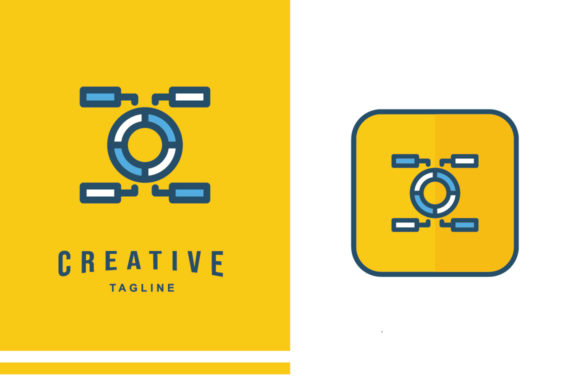
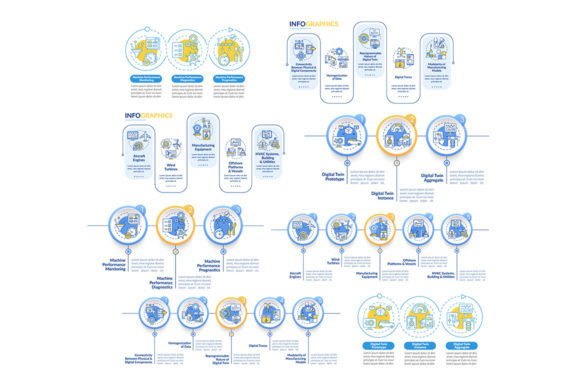
In the contemporary landscape of digital branding, the static symbol is rapidly evolving into a dynamic narrative tool. As professionals, creators, and entrepreneurs navigate an increasingly saturated market, the demand for visual assets that communicate complex value propositions instantly has never been higher. This shift has given rise to the Infographic Logo, a hybrid design discipline that fuses traditional brand identification with the clarity of data visualization. We have included our latest logo with amazing quality and new idea to enjoy the process of logo design, specifically tailored to meet this modern intersection of aesthetics and information architecture.
This evolution is not merely a stylistic trend; it is a response to changing consumer behaviors and technological workflows. Today’s audience processes visual information faster than text, yet they crave depth and substance over superficial decoration. The Infographic Logo bridges this gap, serving as both a memorable mark and a functional communication device. By integrating diagrammatic elements directly into brand identity, businesses can convey industry expertise, process transparency, and analytical capability at a glance.
Redefining Visual Communication in the Information Age
To understand the relevance of the Infographic Logo, one must first recognize the broader transformation in how brands interact with their audiences. We are operating in an attention economy where cognitive load is high. Traditional logos often rely on abstract metaphors or typographic treatments that require years of marketing spend to imbue with meaning. In contrast, an infographic-style identity leverages pre-existing visual literacy. When a viewer sees nodes connecting, charts rising, or gears interlocking within a logo, they immediately associate the brand with connectivity, growth, or engineering precision without needing explanatory copy.
This approach aligns seamlessly with current market trends favoring transparency and education. Consumers and B2B clients alike prefer brands that demystify their services. A design agency utilizing an Infographic Logo signals that they understand structure and strategy, not just art. Similarly, a tech startup using data-driven iconography in their primary mark suggests a product rooted in analytics and measurable results. This is why people are paying attention to this format; it reduces friction in the sales funnel by making the brand’s core competency visually self-evident.
The Practical Advantage of Editable Vector Assets
While the conceptual benefits are significant, the practical application relies heavily on technical versatility. You only have to add your text and that’s it. This simplicity belies the sophisticated utility underneath. Because these assets are built on vector mathematics rather than raster pixels, they remain infinitely scalable without degradation. You can use your logo everywhere, maintaining crisp edges whether it appears as a 16-pixel favicon, a social media avatar, or a large-format banner at a trade show.
For professionals managing multiple touchpoints, this adaptability is non-negotiable. The ability to edit colors, stroke weights, and typography ensures that the Infographic Logo remains consistent across diverse mediums. Whether you are printing on t-shirts, business cards, or promotional cups, the vector format guarantees professional output. However, a critical technical consideration remains: Note please make sure your software support vector format before purchasing the product. Compatibility with industry-standard tools like Adobe Illustrator, Affinity Designer, or CorelDRAW is essential to fully leverage the customization potential of these designs.
Empowering Agencies and Local Businesses Through Modular Design
The utility of the Infographic Logo extends beyond individual brand owners; it serves as a powerful asset for service providers and retailers. If you operate a Design Agency, these logos offer a unique value proposition for clients who need rapid deployment without sacrificing strategic depth. Instead of spending weeks on abstract concepting, agencies can utilize high-quality infographic templates as a foundation, customizing them to reflect specific client data points or workflows. This accelerates turnaround times while delivering a premium, intellectually robust result.
Similarly, local shop owners and print-on-demand entrepreneurs can capitalize on this trend. You can also use these logos with your clients if you have a Design Agency, or you can edit and print them on anything like t-shirts, cups and more if you have a shop on your town. The geometric nature of infographic designs makes them particularly suitable for merchandise. Unlike complex illustrations that may lose detail when embroidered or screen-printed, the clean lines and distinct shapes of infographic logos reproduce beautifully on physical goods. This creates additional revenue streams and enhances brand visibility through wearable and usable products.
Aligning with Modern Workflow Expectations
The rise of the Infographic Logo also reflects a fundamental change in creative workflows. Modern marketers and freelancers operate in agile environments where speed and iteration are paramount. The expectation is no longer to receive a "black box" deliverable from a designer but to possess a living system that can evolve with the business. Our latest collection addresses this need by providing structured, layered files that invite collaboration rather than passive consumption.
This modularity supports A/B testing and platform-specific optimization. A marketer might use a simplified version of the infographic logo for Instagram stories while deploying the full, detailed version for a whitepaper cover or LinkedIn header. This flexibility acknowledges that brand identity is no longer monolithic; it is contextual. By providing assets that are designed to be modified, we empower users to maintain relevance across different platforms without breaking brand consistency.
The Intersection of Lifestyle, Technology, and Design
Beyond business metrics, the Infographic Logo resonates with broader lifestyle and cultural shifts. We live in a quantified society where fitness trackers, financial apps, and productivity tools visualize our daily lives. People are accustomed to seeing their personal data represented through charts and graphs. When a brand adopts this visual language, it feels native to the user's digital ecosystem. It suggests that the brand is compatible with a data-literate, efficiency-oriented lifestyle.
Furthermore, as artificial intelligence and automation reshape industries, there is a growing appreciation for human-curated clarity. While AI can generate endless variations of generic symbols, the intentional structure of an Infographic Logo represents human synthesis—the act of organizing chaos into understanding. This adds a layer of perceived value and trustworthiness. In a world of algorithmic noise, structured visual communication stands out as a signal of competence and care.
Future-Proofing Your Visual Identity
Adopting an Infographic Logo is also a forward-looking strategy. As augmented reality (AR) and spatial computing become more prevalent, flat design is beginning to incorporate depth and interaction. The component-based nature of infographic designs translates exceptionally well to 3D and interactive environments. Individual chart elements can be animated, extruded, or made responsive to user input in ways that solid, organic logos cannot. By establishing a brand identity rooted in modular geometry today, businesses lay the groundwork for immersive experiences tomorrow.
Moreover, accessibility standards are becoming a central concern in web and app design. Infographic logos, when properly constructed with semantic color palettes and clear contrast ratios, can enhance readability for users with visual impairments. The emphasis on clarity over ornamentation naturally aligns with inclusive design principles, ensuring that brand communication reaches the widest possible audience effectively.
Maximizing ROI Through Versatile Application
Ultimately, the decision to invest in a high-quality Infographic Logo is an exercise in resource optimization. The cost of commissioning a custom data-viz identity from scratch can be prohibitive for many small businesses and freelancers. By utilizing premium, editable templates, organizations gain access to top-tier design thinking at a fraction of the cost. More importantly, they gain immediate ownership of a versatile asset that works across every conceivable medium.
Consider the lifecycle of a single vector file: it begins as a website header, transforms into an email signature, becomes a watermark for video content, prints on packaging, and eventually adorns team apparel. At every stage, the Infographic Logo reinforces the brand’s message of clarity and expertise. This compounding effect maximizes return on investment far beyond what a purely decorative mark could achieve.
As you explore our latest collection, remember that these are not just images; they are strategic frameworks waiting for your unique input. We have included our latest logo with amazing quality and new idea to enjoy the process of logo design because we believe that great branding should be accessible, adaptable, and intelligent. Whether you are launching a SaaS platform, rebranding a consultancy, or stocking a retail store with distinctive merchandise, the Infographic Logo provides the structural integrity and visual appeal necessary to succeed in today’s complex marketplace. Just ensure your technical environment is prepared to handle vector formats, and you will be ready to transform simple geometry into a powerful business asset.