Boss Leader Company Minimal Infographic: Integrating Visual Assets into Professional Workflows
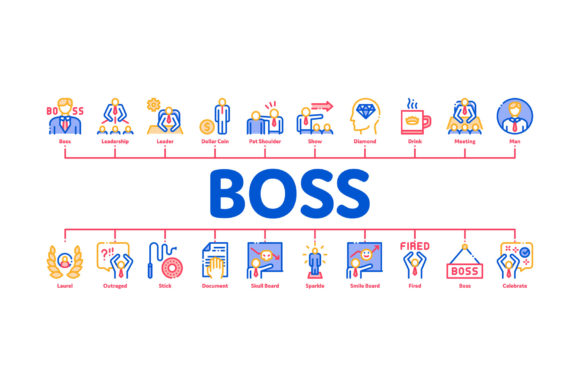
Effective business communication relies heavily on the speed and clarity with which information is presented. The Boss Leader Company Minimal Infographic serves as a foundational visual asset designed to streamline the creation of corporate presentations, reports, and digital content. Rather than viewing this resource merely as a decorative element, professionals should approach it as a functional component of their broader design and communication workflow. This vector-based collection, featuring concepts like leadership hierarchies, meeting dynamics, and performance metrics, bridges the gap between raw data and stakeholder understanding.
In a practical setting, this infographic system fits into the intersection of content strategy and visual design. It is most valuable when time constraints are tight but professional standards remain high. Whether you are a freelancer pitching a new client, an HR manager explaining organizational restructuring, or a marketer outlining quarterly growth, these assets provide a pre-structured visual language. By utilizing standardized minimal aesthetics, teams can maintain brand consistency across disparate projects without reinventing the visual wheel for every new document or slide deck.
Strategic Application Across Project Phases
The utility of the Boss Leader Company Minimal Infographic extends beyond simple decoration; it plays a distinct role before, during, and after core business activities. Understanding where to deploy these assets maximizes their return on investment regarding time saved and message clarity.
Pre-Project Planning and Proposals
During the planning phase, clarity is often more important than polish. When drafting proposals or internal strategy documents, these infographics serve as rapid prototyping tools. Instead of writing lengthy paragraphs to describe a proposed management structure or a firing protocol, a project lead can insert the relevant "Boss on Tablet" or "Meeting Concept" illustration to anchor the discussion. This allows stakeholders to visualize the intended outcome immediately. For entrepreneurs and small business owners, using these vectors in pitch decks helps establish credibility early, signaling that the operational side of the business has been thoughtfully considered.
Execution and Active Communication
During active project execution, communication frequency increases. Team leads often need to provide updates via email newsletters, Slack channels, or interim reports. The minimal nature of these graphics ensures they do not overwhelm the text-heavy nature of status updates. For example, when discussing sensitive topics like personnel changes or document compliance, the "Fired and Document Concept" illustrations provide a neutral, professional tone that mitigates emotional friction. They act as visual signposts, guiding the reader through complex procedural information without adding unnecessary cognitive load.
Post-Project Review and Archiving
After a project concludes, the focus shifts to reporting and knowledge retention. Final reports often suffer from density, making them difficult to review months later. Integrating summary infographics at the beginning of post-mortem documents creates an executive snapshot. Furthermore, because these assets are available in EPS format, they can be archived in a company’s central design library. Tagging these files by concept—such as "leadership," "conflict resolution," or "data presentation"—ensures they remain accessible for future workflows, reducing redundant search time for creative teams.
Technical Integration and Format Compatibility
Successful implementation depends on understanding the technical specifications of the Boss Leader Company Minimal Infographic package. The inclusion of both JPG and EPS formats dictates how and where these assets should be utilized within your existing software ecosystem.
- EPS Files for Print and Scalability: The Encapsulated PostScript (EPS) format is essential for any output requiring high resolution or physical printing. Marketing teams creating banners, brochures, or large-format posters must use the EPS files to prevent pixelation. These vectors are also necessary when customizing colors to match specific brand guidelines in Adobe Illustrator or Affinity Designer. Editing capabilities allow users to isolate specific elements, such as removing the crown icon if a less hierarchical aesthetic is required.
- JPG Files for Digital Speed: For web banners, social media posts, or internal memos, the JPG format offers immediate usability. These rasterized versions are optimized for screen display and require no specialized vector software to implement. Content managers can drag and drop these directly into CMS platforms, email marketing tools, or presentation software like PowerPoint and Keynote. This format prioritizes workflow velocity over editability.
- Cross-Platform Consistency: When working across different operating systems or software suites, maintaining visual consistency can be challenging. Using a unified asset pack ensures that the line weight, color palette, and stylistic tone remain identical whether the final output is a PDF report generated on Windows or a web banner designed on macOS.
Workflow Efficiency and Asset Management
Integrating the Boss Leader Company Minimal Infographic into daily routines requires organized asset management. Disorganized file structures negate the time-saving benefits of pre-made templates. Professionals should establish a centralized repository for these vectors, ideally integrated with cloud storage solutions like Google Drive, Dropbox, or SharePoint.
Naming conventions play a critical role in retrieval efficiency. Renaming generic files to descriptive tags such as "Leader_Team_Meeting_Vector.eps" or "Performance_Review_Doc_Concept.jpg" allows team members to locate appropriate visuals via search functions rather than browsing through folders. For agencies or departments with multiple designers, creating a shared style guide that references these specific assets prevents version conflicts and ensures everyone utilizes the correct file format for the intended medium.
Efficiency also involves knowing when not to use these assets. While versatile, minimal infographics are best suited for conceptual representation rather than precise data visualization. If a report requires exact statistical accuracy, a custom-generated chart based on live data is superior. Use the Boss Leader Company assets to frame the narrative, explain processes, or illustrate qualitative concepts, while reserving dynamic charting tools for quantitative analysis. This distinction maintains the integrity of the information while leveraging the aesthetic benefits of the vector pack.
Contextual Use Cases for Diverse Professionals
Different roles interact with these visual resources in unique ways. Recognizing these specific applications helps tailor the integration process to individual needs.
Educators and Trainers
For corporate trainers and educators, abstract concepts like "leadership dynamics" or "organizational hierarchy" can be difficult to teach through text alone. The "Boss On Tablet And Cup With Crown" illustration serves as a metaphorical anchor in training modules. It can be used in e-learning courses to signify module transitions or in workshop slides to prompt discussion about authority and responsibility. The minimal style prevents cultural or demographic bias, making the materials applicable to diverse learner groups.
Human Resources and Administration
HR professionals frequently navigate sensitive documentation. The "Fired And Document Concept" illustrations provide a way to visualize termination workflows, compliance checklists, or policy updates without appearing aggressive or unprofessional. In employee handbooks, these visuals break up dense legal text, improving readability and retention. During onboarding, they help map out reporting lines and expectations visually, reducing anxiety for new hires trying to understand company structure.
Marketers and Content Creators
Content creators face the constant pressure of producing fresh visuals. The Boss Leader Company Minimal Infographic Web Banner Vector specifically addresses the need for consistent header imagery across blog posts, articles, and landing pages. Because the style is minimal, it pairs well with various typography choices and background colors, allowing marketers to adapt the asset to different campaigns without losing brand recognition. This reduces reliance on expensive stock photo subscriptions for generic business imagery.
Quality Control and Long-Term Viability
To ensure these assets remain effective over time, users must apply basic quality control measures. Regularly auditing the asset library ensures that files are not corrupted and that naming conventions remain consistent. As brand identities evolve, the editable EPS files should be updated to reflect current color palettes, creating a "master" version that supersedes older iterations.
Long-term viability also depends on licensing awareness. Users must verify that their usage rights align with their distribution methods, particularly for commercial web banners or published educational materials. Keeping license documentation alongside the asset files prevents future legal complications.
Ultimately, the Boss Leader Company Minimal Infographic is a tool for reducing friction in professional communication. By treating it as a systematic resource rather than a collection of isolated images, professionals can enhance clarity, accelerate production timelines, and maintain a cohesive visual identity across all business touchpoints. Successful integration lies in preparation, organization, and a clear understanding of how visual metaphors support, rather than replace, substantive content.