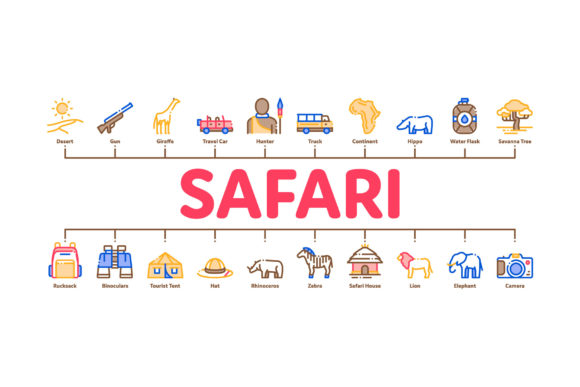
Elevating Visual Storytelling with Safari Travel Minimal Infographic Assets
In the rapidly evolving landscape of digital marketing and content creation, the demand for visual assets that balance aesthetic appeal with functional clarity has never been higher. For professionals ranging from freelance designers to corporate marketing directors, the challenge often lies in finding imagery that communicates complex narratives without overwhelming the viewer. This is where specialized design resources like the Safari Travel Minimal Infographic Banner have carved out a significant niche. These assets are not merely decorative; they represent a strategic intersection of cultural storytelling, minimalist design principles, and practical utility that aligns perfectly with current industry standards.
The modern creative economy values efficiency as much as originality. While bespoke illustration remains a gold standard, the timeline and budget constraints of contemporary projects often necessitate high-quality, adaptable vector resources. The Safari Travel Minimal Infographic Web Banner Vector serves as a prime example of how stock assets have evolved from generic placeholders into sophisticated foundational elements for professional design workflows. By integrating specific thematic elements such as animal silhouettes, African landscapes, vehicles, and human figures, these banners provide an immediate visual shorthand for adventure, exploration, and eco-conscious travel.
The Shift Toward Functional Minimalism in Travel Marketing
To understand the relevance of these specific infographic banners, one must first examine the broader trend of functional minimalism within the travel and tourism sector. Historically, safari and adventure travel marketing relied heavily on dense, hyper-realistic photography or ornate, illustrative styles that mimicked vintage postcards. While evocative, these approaches often struggle in digital environments where screen real estate is limited and user attention spans are fleeting.
Minimalist infographics address this friction by stripping away non-essential details to focus on core messaging. A Safari Travel Minimal Infographic Banner utilizes negative space and simplified geometry to guide the viewer’s eye toward key information—be it tour statistics, itineraries, or sustainability metrics. This design philosophy mirrors the "less is more" approach gaining traction in user interface (UI) design and data visualization. For marketers, this means the asset does double duty: it establishes a thematic mood while simultaneously serving as a container for actionable data.
This shift is also driven by changing consumer preferences. Modern travelers, particularly millennials and Gen Z, increasingly value authenticity and transparency over polished perfection. Minimalist vector art, with its clean lines and abstract representations of Animal And Africa themes, feels less manufactured than heavily retouched stock photography. It suggests a curated, thoughtful experience rather than a mass-produced commodity, aligning brand identity with the values of conscious consumption and sustainable tourism.
Thematic Resonance: Integrating Iconography and Narrative
The effectiveness of an infographic banner relies heavily on its iconographic vocabulary. The specific combination of elements found in these safari-themed vectors—namely the interplay between nature, technology, and humanity—reflects the actual dynamics of the modern safari experience. When designers utilize illustrations featuring a Car And Tree or a Human Silhouette And Hat Safari Adventure Concept, they are tapping into a universally recognized visual language that transcends linguistic barriers.
The Vehicle and Nature Dichotomy
The inclusion of the safari vehicle alongside natural elements like trees or wildlife is not just a stylistic choice; it is a narrative necessity. In the context of an infographic, the vehicle often represents logistics, safety, and accessibility, while the tree or animal represents the destination and the ecological stakes. Balancing these two elements in a minimal composition allows creators to communicate the harmony between human exploration and environmental preservation. This is particularly relevant for businesses promoting eco-tourism, where the message must carefully navigate the tension between access and conservation.
The Human Element and Aspirational Identity
Silhouettes serve a unique psychological function in marketing visuals. Unlike detailed portraits, a Human Silhouette And Hat Safari Adventure Concept Illustration acts as an avatar for the viewer. It removes specific demographic markers, allowing a wider audience to project themselves into the scene. For entrepreneurs and marketers building landing pages or social media campaigns, this universality increases conversion potential. The silhouette implies action and participation rather than passive observation, reinforcing the active nature of safari travel.
Technical Versatility: JPG vs. EPS in Professional Workflows
For professionals, the file format of a design asset is just as critical as its visual content. The availability of both JPG and EPS formats for the Safari Travel Minimal Infographic Web Banner Vector addresses distinct stages of the production pipeline. Understanding when and how to leverage each format is essential for maintaining workflow efficiency and output quality.
- EPS (Encapsulated PostScript): This vector-based format is the industry standard for scalability and editability. Because it uses mathematical paths rather than pixels, an EPS file can be resized infinitely without loss of quality. This is indispensable for responsive web design, large-format printing, or rebranding projects where color palettes need adjustment. Designers using Adobe Illustrator or Affinity Designer can deconstruct the banner, isolate individual elements like the car or hat, and repurpose them across multiple touchpoints.
- JPG (Joint Photographic Experts Group): While raster-based, high-resolution JPGs remain vital for rapid prototyping, client presentations, and direct-to-web usage where vector support is limited. Having a pre-rendered JPG version allows non-design stakeholders to visualize the concept immediately without requiring specialized software. It serves as a reference point and a quick-deployment option for email newsletters or blog headers.
This dual-format availability reflects a mature understanding of cross-functional team needs. Agencies often require vectors for their design teams but JPGs for their account managers and copywriters. Providing both ensures that the asset integrates seamlessly into diverse technological ecosystems, from Figma and Sketch to WordPress and Mailchimp.
Strategic Applications Across Industries
The utility of these minimal infographic banners extends far beyond traditional travel agencies. As the experience economy expands, various sectors are adopting safari and adventure aesthetics to convey values of discovery, resilience, and organic growth.
- Educational Platforms: E-learning providers focusing on geography, biology, or environmental science use these visuals to make dense academic content more engaging. The minimalist style reduces cognitive load, helping students focus on learning objectives rather than distracting background details.
- Corporate Retreats and Team Building: Companies organizing off-site leadership training often utilize safari motifs to symbolize navigating uncharted territory. An infographic banner can outline retreat schedules or team goals using the familiar visual metaphor of a journey through the wilderness.
- Sustainable Fashion and Lifestyle Brands: Brands emphasizing ethical sourcing or outdoor durability frequently borrow from safari iconography. The clean, earthy aesthetic of minimal vector art aligns with the "quiet luxury" and utilitarian trends currently dominating fashion marketing.
- Non-Profit and Conservation Advocacy: NGOs require visuals that are emotive yet professional. Minimalist illustrations avoid the "poverty porn" or sensationalism sometimes associated with wildlife photography, offering a dignified, modern way to present impact reports and fundraising goals.
Future-Proofing Visual Content Strategies
As we look toward the future of digital content, the role of adaptable, semantic visual assets will only grow. Search engines and social platforms are increasingly prioritizing content that offers genuine value and clear structure. Infographics, by definition, organize information in a way that is both human-readable and algorithm-friendly. When paired with proper alt text and semantic HTML implementation, a Safari Travel Minimal Infographic Banner contributes to better SEO performance and accessibility compliance.
Furthermore, the rise of AI-generated imagery has paradoxically increased the value of curated, professionally structured vector assets. While AI can generate endless variations of safari scenes, it often struggles with the precise layout, typography integration, and editable layering required for commercial infographics. Human-designed vectors offer a level of intentionality and technical reliability that generative models cannot yet consistently replicate. For professionals who need guaranteed consistency and legal clarity, premium vector resources remain the superior choice.
Ultimately, the decision to incorporate assets like the Safari Travel Minimal Infographic Web Banner Vector is a strategic one. It signals a commitment to clarity, cultural awareness, and technical excellence. Whether used to map out a literal journey across the Serengeti or a metaphorical journey through business growth, these illustrations provide the visual scaffolding necessary to tell compelling stories in a noisy digital world. By embracing minimalism and modularity, creators and entrepreneurs can ensure their content remains relevant, resonant, and rigorously professional.