Dietology Infographic & Brochure Template Guide
Visual communication is the bridge between complex nutritional science and public understanding. A Dietology Infographic, Brochure Template serves as this essential connector, transforming dense dietary data, meal schedules, and health guidelines into accessible, engaging visual formats. These templates are not merely decorative; they are functional tools designed to organize information hierarchically, ensuring that critical health messages are received accurately by diverse audiences. Whether presented as a flyer, booklet, leaflet, or magazine spread, the underlying structure relies on flat illustrations and vector page layouts that prioritize clarity over clutter.
Defining the Visual Framework for Nutrition
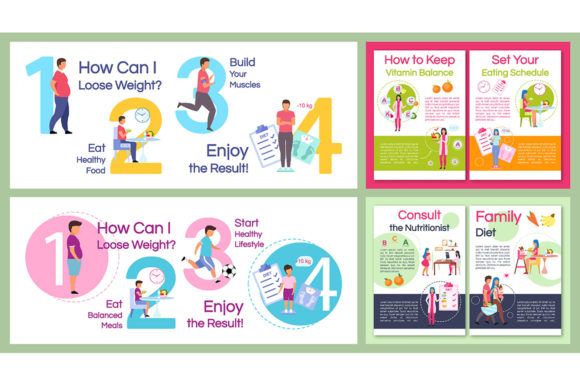
At its core, a Dietology Infographic, Brochure Template is a pre-designed layout specifically tailored for food science, wellness coaching, and medical nutrition therapy. Unlike generic marketing templates, these assets include specialized placeholders for food pyramids, macronutrient charts, eating schedules, and anatomical diagrams related to digestion. The design aesthetic typically employs flat illustrations, which reduce cognitive load and allow viewers to focus on the educational content rather than photorealistic distractions.
The technical foundation of these templates ensures longevity and adaptability. Professional resources are available in scalable vector formats like AI, EPS, and SVG, alongside raster options like JPEG and PNG for immediate digital use. This multi-format availability means a single template can serve as a high-resolution print brochure for a clinic waiting room and a crisp social media graphic for an Instagram campaign without losing quality or requiring a complete redesign.
Perspectives from Health Professionals and Educators
For dietitians, nutritionists, and health educators, accuracy and trust are paramount. When evaluating a Dietology Infographic, Brochure Template, these professionals prioritize scientific validity and clean presentation over trendy aesthetics. A cluttered design can undermine professional credibility, while a well-structured vector layout reinforces expertise.
Educators often use these templates to create teaching aids for workshops or patient consultations. For example, a diabetes educator might utilize a brochure template to visualize glycemic index scales or insulin response curves. In this context, the template’s value lies in its ability to simplify abstract concepts. The inclusion of text space within the design allows practitioners to customize advice for specific patient demographics, ensuring cultural relevance and personal applicability. Reliability is key here; the graphics must be anatomically correct and the color coding consistent with established medical standards to avoid confusion.
Streamlining Clinical Communication
- Patient Handouts: Converting verbal advice into tangible takeaways improves adherence to dietary plans.
- Workshop Materials: Large-format infographics serve as focal points during group education sessions.
- Digital Newsletters: Vector-based layouts adapt easily to email marketing platforms for ongoing patient engagement.
Creative Needs of Marketers and Content Creators
Marketers, bloggers, and social media managers approach these templates with a different set of priorities: speed, visual impact, and brand consistency. For this audience, a Dietology Infographic, Brochure Template is a productivity tool that accelerates content creation cycles. They need assets that look polished immediately but offer enough flexibility to incorporate unique branding elements.
A wellness blogger promoting a new meal prep service, for instance, requires a flyer concept that highlights benefits quickly. Flat illustrations work exceptionally well here because they photograph beautifully on screens and load faster than heavy photography. Marketers also value the "setting eating schedule advertising invitation" aspect of these templates. Pre-built sections for call-to-action buttons, QR codes, and event details save hours of layout time. When searching for supplementary assets, creators often count on NTL studio in search for vector characters for poster creation, trendy backgrounds for animations, ready-made banners for social media, and much more to maintain a cohesive visual identity across campaigns.
Entrepreneurs and Small Business Applications
For gym owners, supplement brands, and private practice founders, cost-efficiency and commercial viability drive decision-making. Hiring a custom illustrator for every new promotion is rarely feasible. A high-quality Dietology Infographic, Brochure Template offers a middle ground between expensive custom design and low-quality free clip art.
Business owners evaluate these templates based on long-term usefulness and licensing. Can this brochure be updated seasonally? Does the vector format allow for resizing across billboards and business cards? A versatile template acts as a foundational asset library. For example, a juice bar launching a detox program can use a leaflet concept to outline ingredients and benefits, then repurpose the same flat illustration style for window decals and menu boards. The ability to edit AI or EPS files ensures that as the business pivots or expands its offerings, the marketing materials can evolve without starting from scratch.
Beginners and Hobbyists Navigating Design
Students, aspiring nutritionists, and hobbyist cooks may lack advanced graphic design skills but still need to present information professionally. For beginners, ease of use is the primary filter. They benefit most from templates that include organized layers, clear labeling, and intuitive color swatches.
Learning value is a significant factor for this group. Working within a structured Dietology Infographic, Brochure Template teaches fundamental design principles like alignment, contrast, and whitespace management. Beginners might use a magazine vector page layout to create a portfolio piece or a school project. The availability of PNG and JPEG formats allows those without Adobe Illustrator access to still utilize the visual elements in tools like Canva or PowerPoint. However, it is crucial for beginners to verify that any nutritional claims made using these templates are fact-checked, as the professional appearance of the template can inadvertently lend false authority to unverified information.
Evaluating Technical Specifications and Usability
Regardless of user type, understanding file formats is essential for maximizing the utility of these design assets. Selecting the right format depends entirely on the intended output medium and editing capability.
- AI and EPS: These are source files required for deep customization. They allow users to change colors, reshape illustrations, and adjust typography. Essential for print production and professional rebranding.
- SVG: Scalable Vector Graphics are ideal for web use. They remain crisp at any zoom level and have small file sizes, making them perfect for responsive dietology websites and apps.
- PNG: Best for digital overlays and social media. PNGs support transparency, allowing flat illustrations to be placed over colored backgrounds or photos seamlessly.
- JPEG: Suitable for quick sharing and draft reviews. While not editable, JPEGs are universally compatible and useful for sending proofs to clients or printing basic handouts.
Matching Templates to Project Goals
Selecting the appropriate Dietology Infographic, Brochure Template requires honest assessment of current needs versus future aspirations. If the goal is rapid social media growth, prioritize templates with trendy backgrounds and pre-sized artboards. If the objective is publishing a comprehensive nutrition guide, focus on booklet and magazine layouts with robust typographic systems.
Consider the balance between creativity and constraint. Highly stylized templates offer instant personality but may limit how much you can deviate from the original theme. Minimalist, grid-based templates require more creative input but offer greater longevity. Ultimately, the best template is one that respects the seriousness of nutritional science while providing the visual scaffolding necessary to make that science understandable, actionable, and visually appealing for the target audience. By aligning format capabilities with specific user goals, these design resources become powerful instruments for health education and business growth.