Elevating Real Estate Communication with Minimalist Architectural Vectors
In the high-stakes world of real estate development and property marketing, clarity is not merely an aesthetic preference; it is a business imperative. As urban density increases and mixed-use developments become more complex, the ability to communicate spatial relationships, investment potential, and lifestyle benefits instantly has never been more critical. This is where the strategic application of an Apartment Building Minimal Infographic transforms from a simple design element into a vital communication tool. For professionals ranging from architects and developers to freelance marketers and content creators, mastering this visual language is essential for bridging the gap between technical architectural data and consumer understanding.
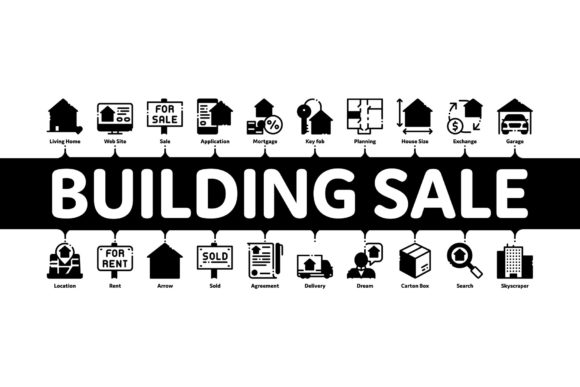
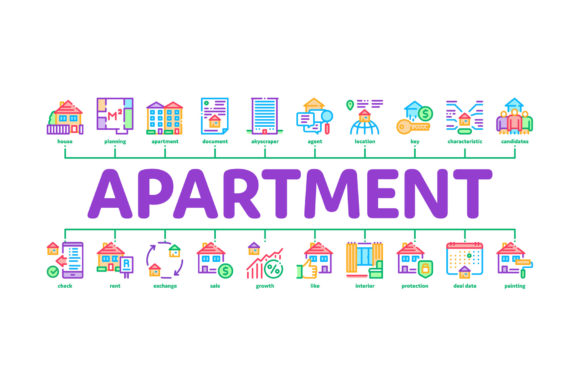
The shift toward minimalism in real estate visualization is not a fleeting trend but a response to cognitive overload. Modern stakeholders are inundated with photorealistic renders that, while beautiful, often fail to convey functional information efficiently. A well-executed minimal infographic strips away the noise, focusing strictly on hierarchy, flow, and key metrics. When paired with complementary assets like an Apartment Building Minimal Infographic Web Banner Vector, these tools create a cohesive narrative that guides the viewer’s eye exactly where it needs to go, whether that is toward floor plan efficiency or investment ROI.
The Strategic Role of Minimalism in Property Marketing
To understand why specific vector assets are gaining traction, we must first look at the broader evolution of real estate marketing. The industry is moving away from aspirational-only imagery toward informational transparency. Buyers and investors today are more educated and data-driven than previous generations. They do not just want to see what a building looks like; they want to understand how it functions.
An Apartment Building Minimal Infographic serves this need by translating complex architectural projects into digestible visual data. Unlike traditional blueprints, which require specialized knowledge to interpret, minimal infographics use universal visual cues—clean lines, ample negative space, and intuitive iconography—to explain concepts like unit mix, amenity distribution, and circulation patterns. This accessibility is crucial in a market where decisions are often made quickly based on digital presentations.
Furthermore, this aesthetic aligns with current web performance standards and mobile-first consumption habits. Heavy, detailed illustrations can slow down landing pages and appear cluttered on smaller screens. Vector-based minimal designs scale infinitely without losing fidelity, ensuring that an Apartment Building Minimal Infographic Web Banner Vector looks as crisp on a smartphone as it does on a 4K presentation monitor. This technical versatility makes these assets indispensable for responsive web design and cross-platform marketing campaigns.
Essential Visual Assets for the Modern Real Estate Workflow
For creators and entrepreneurs building real estate brands, having a library of adaptable, high-quality vectors is a significant workflow accelerator. However, not all assets serve the same purpose. Understanding the distinct roles of different illustration types allows for more effective storytelling.
The Power of the Apartment Floor Plan Architectural Project And House Illustration
Floor plans remain the single most important document in residential real estate, yet their presentation often lags behind modern design standards. The Apartment Floor Plan Architectural Project And House illustration style represents a hybrid approach that balances technical accuracy with marketing appeal. These vectors typically feature simplified wall lines, color-coded zones, and integrated furniture layouts that suggest scale without overwhelming the viewer with dimension lines.
This specific asset type is particularly relevant for pre-construction sales and renovation proposals. It allows stakeholders to visualize the "bones" of the project without the distraction of textures or lighting effects. For freelancers and agencies, utilizing vector formats for these plans means they can easily customize colors, labels, and layouts to match specific client branding guidelines without redrawing the entire schematic. This adaptability reduces turnaround times and ensures consistency across brochures, websites, and signage.
Closing the Deal: Real Estate Agreement And Key Illustrations
While architectural visuals sell the space, transactional visuals sell the security. The Real Estate Agreement And Key Illustration addresses the psychological aspect of the buying process. In a minimalist design system, these icons serve as trust signals. A stylized handshake, a pen signing a document, or a sleek key icon can demystify the legal and financial complexities of property acquisition.
These elements are frequently used in call-to-action sections, FAQ breakdowns, and process timelines. By maintaining the same minimal line weight and color palette as the architectural infographics, designers create a unified visual identity that reinforces professionalism. When a user sees a consistent design language extending from the building overview down to the contract signature, it subconsciously reinforces the idea that the developer pays attention to detail in every aspect of the project.
Technical Considerations: JPG vs. EPS Formats
For professionals managing large-scale creative projects, file format is a practical concern that impacts both quality and efficiency. Understanding when to utilize JPG versus EPS files is fundamental to leveraging these assets effectively.
- EPS (Encapsulated PostScript): This is the master format for any serious design work. Because EPS is a vector format, it stores mathematical descriptions of shapes rather than pixels. This means an Apartment Building Minimal Infographic Web Banner Vector in EPS format can be scaled to the size of a billboard or shrunk to a favicon without any loss of resolution. Crucially, EPS files allow for non-destructive editing. Designers can change stroke widths, swap brand colors, and rearrange components within Adobe Illustrator or similar software. For custom branding and print materials, EPS is non-negotiable.
- JPG (Joint Photographic Experts Group): While raster-based, JPG remains the standard for quick digital deployment. High-resolution JPG exports of minimal infographics are ideal for social media posts, email newsletters, and web previews where file size impacts load speed. However, JPGs lack editability. Once flattened, the layers are merged, making color changes or layout adjustments difficult and destructive. Professionals should treat JPGs as final output files derived from EPS masters, never as source files.
Maintaining a dual-format workflow ensures that teams have the flexibility to iterate on designs during the planning phase while having ready-to-deploy assets for immediate marketing needs.
Adapting to Changing Industry Needs and Preferences
The rising demand for these specific visual assets reflects deeper shifts in how the real estate industry operates. Several key trends are driving this relevance:
- The Rise of PropTech and Digital Twins: As real estate becomes increasingly digitized, static images are being integrated into dynamic platforms. Minimal vector graphics serve as the UI layer for digital twin technologies and interactive property maps. Their clean geometry translates easily into interactive web elements, allowing users to click through units or toggle amenity layers.
- Sustainability and ESG Reporting: Modern developments must communicate environmental performance. Minimal infographics are uniquely suited for displaying energy ratings, green certifications, and sustainability metrics without appearing preachy or cluttered. The clean aesthetic associates the project with modernity and efficiency, reinforcing the ESG message visually.
- Remote Sales and Virtual Consultations: With fewer in-person site visits, digital collateral must work harder. Sales agents rely on screen-sharing presentations where clarity is paramount. Complex, dark, or overly textured images can become muddy when compressed over video calls. High-contrast, minimal vectors remain legible even under poor bandwidth conditions, facilitating smoother remote transactions.
- Standardization Across Global Markets: For international developers and investors, visual universality is key. Minimalist design transcends cultural barriers more effectively than photographic realism, which can carry unintended cultural connotations. Abstract representations of housing and agreements focus on function and value, making them safer and more effective for cross-border marketing.
Practical Application for Creators and Marketers
Integrating these assets requires a thoughtful approach to composition and context. Simply placing an Apartment Building Minimal Infographic on a page does not guarantee engagement. Successful implementation relies on establishing a clear visual hierarchy.
When designing a web banner, for instance, the vector should not compete with the headline. Instead, it should act as a visual anchor that supports the copy. If the headline discusses "Smart Living," the accompanying Apartment Building Minimal Infographic Web Banner Vector should highlight connectivity features or automated systems through iconography. If the focus is on "Community," the illustration should emphasize shared spaces and pedestrian flow.
For floor plans, context is equally important. An Apartment Floor Plan Architectural Project And House illustration should always be oriented correctly relative to north and accompanied by a legend if symbols are used. Consistency in line weight between the floor plan and other icons (like the Real Estate Agreement And Key Illustration) creates a polished, professional appearance that builds trust. Disjointed visual styles suggest a lack of organizational cohesion, which can negatively impact perceived property value.
Freelancers and agencies should also consider creating modular asset libraries. By breaking down a comprehensive apartment building infographic into individual components—units, amenities, landscaping, infrastructure—designers can reassemble these pieces for different contexts. A full-building cutaway might be perfect for a brochure cover, while isolated unit diagrams serve better for listing details, and amenity icons work well for social media carousels. This modularity maximizes the ROI of every vector asset acquired or created.
Future-Proofing Visual Communication Strategies
As we look forward, the role of minimal vector graphics in real estate will likely expand rather than diminish. The increasing integration of AI in design workflows will make generating base vectors faster, but the human curation of meaning, accuracy, and brand alignment will remain premium skills. Professionals who understand how to select, modify, and deploy assets like the Apartment Building Minimal Infographic and Real Estate Agreement And Key Illustration will continue to hold a competitive advantage.
Ultimately, these tools are about respect for the audience's time and intelligence. In an era of infinite scrolling and shrinking attention spans, providing clear, beautiful, and functional information is the highest form of customer service. Whether you are a developer launching a new tower, a marketer crafting a campaign, or a freelancer building a portfolio, embracing the precision and versatility of minimal architectural vectors is a strategic investment in clearer communication and stronger business outcomes.