Evaluating the Parking Car Minimal Infographic Banner for Professional Design Projects
In the realm of digital asset creation, finding visuals that balance aesthetic appeal with functional clarity is a persistent challenge. The Parking Car Minimal Infographic Banner addresses this specific niche by combining clean vector art with practical iconography relevant to automotive management and security. For designers, marketers, and facility managers tasked with communicating complex parking logistics or smart city concepts, this resource offers a streamlined alternative to cluttered, photorealistic stock imagery. Its value lies not just in its visual style, but in its structural adaptability across both print and digital mediums.
Core Visual Components and Semantic Relevance
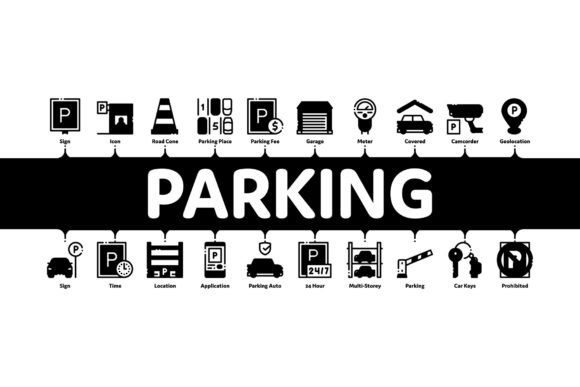
The effectiveness of an infographic banner depends heavily on how quickly the viewer can parse the intended message. This template integrates four distinct conceptual pillars that cover the majority of modern parking narratives. Understanding these elements helps determine if the asset aligns with your specific project requirements.
- Garage and Parking Mark: This element serves as the foundational anchor. Rather than a generic "P" sign, the illustration typically incorporates spatial context, suggesting designated zones or structural layouts. It is essential for wayfinding projects or real estate brochures detailing amenity specifications.
- Video Camera and Surveillance: Security is a primary concern for parking facility operators. The inclusion of camera iconography addresses safety protocols, license plate recognition systems, and 24/7 monitoring services without requiring ominous or aggressive imagery. The minimal style keeps the tone professional rather than alarming.
- Automatic Barrier Systems: Access control is the operational heart of any managed lot. Illustrations of barriers and gates communicate automation, ticketing systems, and entry restrictions. This is particularly useful for B2B presentations selling parking hardware or software solutions.
- Vehicle and Key Concept: This represents the user experience and ownership aspect. Whether depicting traditional keys or modern keyless fobs, this component humanizes the technical infrastructure, making it suitable for consumer-facing apps, insurance materials, or car rental services.
By isolating these concepts into modular vector components, the Parking Car Minimal Infographic Banner allows users to mix and match elements based on relevance. A security firm might emphasize the camera and barrier while minimizing the key concept, whereas a residential developer might prioritize the garage mark and vehicle illustrations.
Technical Flexibility: EPS vs. JPG Workflows
The availability of both EPS and JPG formats dictates how this asset fits into professional production pipelines. While JPG provides immediate usability, the EPS file is where the true long-term value resides for serious creators.
The Strategic Value of Vector (EPS)
The Encapsulated PostScript format ensures that the infographic remains resolution-independent. For large-format printing, such as signage at parking garage entrances or trade show backdrops, vectors prevent the pixelation associated with raster images. More importantly, EPS files allow for deep customization. Professionals can separate layers to recolor specific icons to match corporate brand guidelines, adjust stroke weights for consistency with existing design systems, or rearrange the layout to fit non-standard aspect ratios. This editability transforms a static template into a bespoke design foundation.
Raster Utility (JPG)
The JPG version serves as a rapid deployment option. It is ideal for stakeholders who need to visualize a concept immediately without access to Adobe Illustrator or CorelDRAW. However, users should be aware that JPGs are best reserved for web banners, social media headers, or internal presentation slides where high-resolution scaling is unnecessary. Relying solely on the raster format limits the asset's lifespan and adaptability.
Practical Applications Across Industries
The versatility of the Parking Car Minimal Infographic Banner extends beyond simple decoration. Its structured layout supports various communication goals across different sectors.
- Smart City and Urban Planning: Municipalities and consultants use these visuals to explain integrated parking solutions within broader urban development plans. The minimal style avoids distracting details, allowing planners to focus audience attention on data overlays and flow charts.
- PropTech and SaaS Marketing: Companies selling parking management software often struggle to visualize intangible digital products. These banners provide concrete metaphors for backend processes, helping landing pages convert visitors by visually bridging the gap between code and physical infrastructure.
- Educational and Training Materials: Driving schools, safety instructors, and facility management training programs utilize clear, non-distracting illustrations to teach protocols. The standardized iconography reduces cognitive load for learners processing new information.
- Real Estate and Property Management: High-end property listings benefit from cohesive graphic design. Using a unified visual language for amenities like secure parking elevates the perceived professionalism of the listing compared to inconsistent clip art.
Assessing Quality and Design Consistency
When evaluating vector resources, consistency is often more important than individual artistic flair. The Parking Car Minimal Infographic Banner succeeds because it adheres to a unified stroke weight and corner radius across all four conceptual illustrations. This uniformity is critical; mixing icons with varying line thicknesses or stylistic approaches creates visual dissonance that undermines credibility.
The color palette typically employed in such minimal templates tends toward neutral blues, grays, and whites, which are industry standards for trust and technology. However, the quality of the source file determines how easily these defaults can be overridden. A well-constructed EPS will have global swatches or organized layer groups, reducing the time spent hunting for specific path attributes. Users should inspect the file structure upon download to ensure it meets professional organizational standards before committing to it for client work.
Limitations and Considerations for Implementation
While highly useful, this type of asset has inherent boundaries that professionals must recognize. The minimal aesthetic, by definition, sacrifices detail for clarity. If your project requires showcasing specific hardware models, intricate architectural features, or photorealistic textures, this banner will be insufficient. It is a schematic tool, not a product catalog.
Additionally, cultural context matters. Parking signage and barrier designs vary globally. Users operating in international markets should verify that the illustrated symbols align with local regulations and driver expectations. A barrier arm depicted in the template might resemble North American standards but differ from European or Asian variants, potentially causing confusion in localized campaigns.
Finally, consider the licensing scope. While the formats (JPG/EPS) are standard, usage rights vary by provider. Ensure the license covers commercial modification and redistribution if you plan to incorporate the modified vector into a product you intend to sell, such as a proprietary app interface or a printed guidebook.
Determining Fit for Your Workflow
The Parking Car Minimal Infographic Banner is best suited for professionals who prioritize efficiency and scalability over unique artistic expression. It solves the "blank canvas" problem for technical communicators and marketers who need to convey parking-related concepts quickly and professionally. If your workflow involves frequent iterations, multi-format deliverables, or strict brand compliance, the vector-based nature of this resource justifies the investment.
Conversely, hobbyists or one-off users who lack vector editing software may find limited utility beyond the pre-rendered JPG. In such cases, the asset functions merely as a stock image rather than a design system. Ultimately, the decision to utilize this banner should hinge on whether your project demands the flexibility of scalable graphics or simply requires a static visual placeholder. For those building comprehensive parking or automotive campaigns, the ability to deconstruct and rebuild these elements makes it a pragmatic addition to the creative toolkit.