Headache Minimal Infographic Banner: Visualizing Pain Points with Clarity
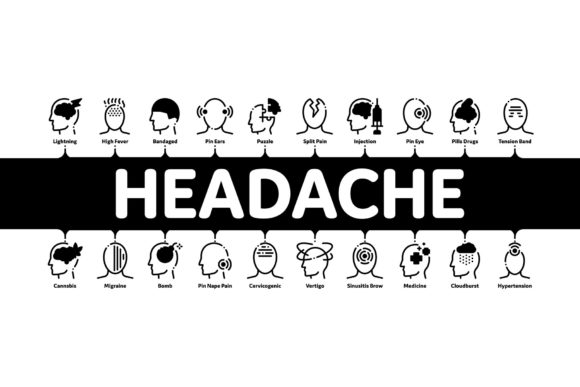
Communicating invisible symptoms like tension headaches, cluster headaches, or migraines is one of the most persistent challenges in healthcare design. Patients struggle to articulate specific pain locations, and medical professionals often rely on vague verbal descriptions that can lead to misdiagnosis or delayed treatment. The Headache Minimal Infographic Banner solves this communication gap by translating complex neurological concepts into clean, linear pictograms. Rather than relying on cluttered anatomical drawings or alarming medical photography, these vector-based contour illustrations offer a sophisticated, empathetic way to discuss head health across digital and print platforms.
This visual asset is more than just decoration; it is a functional communication tool designed for clarity. By utilizing minimal line art and standardized symptom indicators, the banner allows viewers to instantly recognize different headache types without cognitive overload. Whether you are designing a patient intake form, a pharmaceutical landing page, or an educational blog post, these illustrations bridge the gap between clinical accuracy and user-friendly design.
Clinical Applications and Patient Intake
In primary care and neurology clinics, time is the scarcest resource. When a patient arrives suffering from acute head pain, their ability to communicate effectively is often compromised. A Headache Minimal Infographic Banner displayed in a waiting area or integrated into a digital tablet intake system serves as a non-verbal triage tool. Instead of asking open-ended questions that may frustrate a light-sensitive migraineur, staff can point to specific linear pictograms representing unilateral throbbing, bilateral pressure, or orbital pain.
This practical application extends to telehealth consultations where screen real estate is limited. High-resolution JPG versions of these banners can be shared via screen share to help patients identify their symptoms remotely. The minimal aesthetic ensures that the graphics remain legible even on smaller mobile screens or lower-bandwidth connections. For clinic administrators, having EPS source files means these diagrams can be resized indefinitely for wall posters, brochures, or appointment cards without losing crispness, maintaining a professional brand identity across all touchpoints.
Enhancing Digital Health Content
Health and wellness websites face a unique SEO and engagement challenge: they must rank for competitive medical keywords while keeping bounce rates low. Dense blocks of text about "tension-type headache pathophysiology" often drive users away. Integrating a Headache Minimal Infographic Web Banner Vector breaks up textual content and increases dwell time by providing immediate visual value.
Content creators and health bloggers benefit significantly from the semantic relevance of these images. Search engines increasingly prioritize pages that demonstrate expertise and helpfulness. A well-placed infographic that accurately distinguishes between cluster headache patterns and migraine aura signals to both users and algorithms that the content is authoritative. Because these assets are available in vector format, web designers can optimize file sizes for lightning-fast load times—a critical factor for Core Web Vitals—while retaining perfect sharpness on Retina displays.
Pharmaceutical and Product Marketing
Marketing over-the-counter analgesics or prescription migraine treatments requires a delicate balance. Imagery must be relatable enough to validate the consumer's pain but not so graphic that it triggers discomfort or violates advertising standards. The linear pictogram style inherent in these headache infographics strikes this balance perfectly. It abstracts the human experience of pain into a neutral, scientific representation that is safe for general audiences.
Product packaging and point-of-sale displays also leverage these contour illustrations to guide purchasing decisions. A shopper standing in a pharmacy aisle overwhelmed by options can quickly scan packaging featuring minimal headache icons to find the product matching their specific symptoms. This reduces decision fatigue and builds trust in the brand’s understanding of nuanced pain types. For marketing teams, the availability of editable EPS files allows for rapid adaptation of campaigns across different regions or languages without needing to commission entirely new artwork.
Educational Resources and Non-Profit Advocacy
Organizations dedicated to headache disorders often operate with limited budgets but high educational mandates. Creating custom medical illustration is cost-prohibitive for many advocacy groups. Utilizing pre-designed minimal infographic banners allows these organizations to produce professional-grade awareness materials for social media, newsletters, and community workshops. The universal nature of linear pictograms transcends language barriers, making them particularly valuable for multilingual communities or international health initiatives.
Teachers and school nurses also find utility in these resources when creating health education materials for students. Adolescents and young adults, a demographic frequently affected by onset migraines, respond better to modern, app-like aesthetics than dated medical textbook imagery. A clean, minimal banner explaining stress-related tension headaches fits naturally into mental health presentations or student wellness portals, destigmatizing the conversation around chronic pain management.
Technical Considerations for Implementation
Choosing the right format is essential for maximizing the utility of these assets. Understanding when to deploy JPG versus EPS files prevents workflow bottlenecks and quality issues.
- EPS (Encapsulated PostScript): This is your master file. Use EPS vectors for large-format printing, merchandise, or any project requiring color customization. If your brand uses a specific teal or coral palette, the EPS allows you to recolor the linear strokes instantly in Adobe Illustrator or Affinity Designer. It is also the preferred format for responsive web design when converted to SVG.
- JPG (Joint Photographic Experts Group): Ideal for quick deployment in documents, emails, or social media posts where transparency isn't required. Ensure you select high-resolution exports (300 DPI) for print and optimized RGB versions (72-96 DPI) for web use to maintain performance.
- Color Psychology: While the vectors are customizable, consider the psychological impact of color choices in headache contexts. Cool blues and greens are generally associated with relief and calm, whereas reds and oranges should be used sparingly to indicate pain zones without appearing aggressive.
Navigating Medical Accuracy and Empathy
While minimal design offers aesthetic advantages, it carries the responsibility of accuracy. A stylized icon must still correctly represent the anatomical location and nature of the symptom. Before publishing any Headache Minimal Infographic Banner, verify that the pictograms align with current diagnostic criteria. For instance, ensuring that cluster headache illustrations clearly depict periorbital localization rather than generalized cranial pressure is vital for credibility.
Equally important is the tone conveyed through line weight and composition. Heavy, jagged lines may inadvertently suggest severity or danger, potentially increasing anxiety in vulnerable viewers. Smooth, consistent contours promote a sense of manageability and clinical competence. Designers should test these visuals with focus groups or patient advocates to ensure the minimalism reads as supportive rather than dismissive. The goal is always to facilitate understanding, not merely to decorate a layout.
Strategic Integration Across Industries
Beyond direct healthcare, insurance providers utilize these infographics in policy documentation to explain coverage for specific headache disorders. Clear visual definitions help reduce claim disputes and improve member satisfaction. Corporate HR departments incorporate them into occupational health guidelines to help managers recognize signs of employee burnout or ergonomic strain. Even interior designers for healthcare facilities use these vectors as wayfinding or ambient art to create calming, informative environments.
The versatility of the Headache Minimal Infographic Web Banner Vector lies in its adaptability. It serves as a foundational element that can be expanded, cropped, animated, or combined with other data visualization elements. For app developers building symptom trackers, these pictograms provide a ready-made UI library that users already intuitively understand. This reduces development time and creates a seamless user experience from day one.
Ultimately, investing in high-quality, medically accurate vector assets is an investment in communication efficiency. Whether streamlining a doctor’s visit, clarifying a complex article, or guiding a consumer purchase, these minimal illustrations perform heavy lifting silently. They transform abstract suffering into actionable information, empowering users to take control of their head health with confidence and clarity. By prioritizing function alongside form, designers and healthcare providers can create resources that are not only visually appealing but genuinely helpful in real-world scenarios.